
Historical Facts About Honeybells
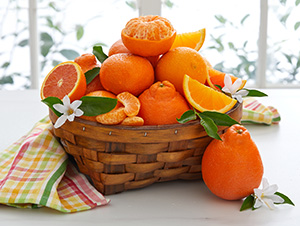
Honeybells are a treasured treat we love to receive in holiday gift baskets. Unlike other citrus fruits, honeybells are only available for a couple of months each year. The harvest of honeybells coincides with the winter holiday season. Honeybells in holiday gift baskets bring a little bit of sunshine all around the country.
While we know everyone loves honeybells today, when did this delightful December to February tradition begin? These alluring citrus hybrids were likely to originate in parts of southern Asia and China when a cross pollination occurred between a pummelo, or grapefruit, and a mandarin orange. The Asian fusion was irresistible!
Honeybells were originally called tangelos because of the cross between tangerines and pummelos. When you combined the two, they joined to become tangelos. The first tangelos in Florida were created by Dr. Walter T. Swingle in 1897. For over one hundred years, honeybells have thrived in the warm Florida climate.
In 1898, similar crosses were created in California by Dr. Herbert J. Webber. Today tangelos are grown in Florida, California, Arizona and Texas. Most of the honeybells we feast on during the holidays are grown and harvested in sunny Florida, known as the home for citrus fruits.
As the popularity of tangelos increased, they became known as honeybells. Unlike other oranges and similar citrus fruits, tangelos have a stem neck. The thin neck with a round fruit resembles a bell. Considering the sweet flavor of tangelos, a name such as honeybell seemed to be a natural choice.
Whether you call them honeybells or tangelos, they definitely appealed to people across the country. As soon as someone tasted the sweet, juicy difference of honeybells, they wanted more. Honeybells are only grown in certain climates during the months of December, January and February. The limited availability of honeybells make them a gourmet selection for many.
The original tangelos created by Drs. Swingle and Webber were renamed Sampson and Thornton tangelos. During this period of time, eight other varieties of tangelos were developed. The Mediterranean climate and sandy soil in Florida make it the perfect growing place for these luscious honeybells.
Other early development of tangelos in Florida was accomplished by the Glen St. Mary Nursery. Their tangelo plantings were named for the Indians of the Lake County region including Seminole and Minneola. The Minneola tangelos are known as the commercial honeybells we enjoy in holiday gift baskets.
By 1931, The Department of Agriculture and Horticulture Research in Orlando allowed the Minneola tangelo to be grown and sold in the United States. The Florida honeybells we love today are a hybrid of a tangerine and ruby red grapefruit. These luscious honeybells are heavy with juice and have a loose reddish-orange skin that’s easy to peel.
People across the country look forward to receiving winter gift baskets overflowing with heavenly honeybells. Their sweet juiciness is a tempting treat few people can resist. Business associates, friends and family remember you a little more fondly when you send them honeybells for the holidays and new year. You can even send your honey honeybells for Valentine’s Day!
Taste the Sunshine with Hale Groves
At Hale Groves, we believe the best gifts come from the land, not a factory. For generations, our fruit has been grown slowly under the Florida sun, picked at its peak, and delivered fresh to your door. From sweet Navel Oranges to rare Honeybells, every gift shares the simple joy of real flavor—perfect for holidays, milestones, or everyday moments worth celebrating.
Shop Now