
Getting to Know Navel Oranges
Anyone who does any kind of shopping has come into contact with navel oranges, but they may not be aware of the fruit’s origin or why navel oranges are better than ordinary oranges for some purposes. Navel oranges are very special and have a partially formed but undeveloped fruit on the blossom end. On the outside it looks like a human navel thus the reason they are common called navel oranges instead of being called Washington, Riverside or Bahia navel oranges. Navel oranges are usually cultivated in Brazil, California, Arizona and Florida and are the most popular variety of oranges available.
For those who are interested in real formality, the scientific name of a navel orange is Citrus sinensis. Navel oranges resulted because of a single mutation that occurred on a Brazilian plantation in 1820. The result of this mutation was the formation of a conjoined twin orange within the rind of a seedless orange. These newly cultivated seedless oranges became so popular that other regions began cultivating them as well. Their alternate name, “Riverside Orange” is the result of the first American location where cultivation of navel oranges resulted. Since that time other places have been added including Florida where they are commonly called Florida navel oranges.
Since navel oranges are seedless they can only reproduce though cuttings. In reality every navel orange that is cultivated results from the same orange tree, namely the Brazilian orange tree where the original spontaneous mutation occurred in 1820. Farmers who cultivate orange trees take cuttings from navel orange trees in order to graft them onto fresh trees on a routine basis in order to ensure their orchards remain healthy and to encourage expansion of current orange trees.
Navel oranges are naturally juicy and sweet. There is another variety of navel oranges called the Cara Cara orange that contains a hint of the taste of strawberries with flesh that is reddish pink instead of the orange color of other varieties of navel oranges. Like any other orange variety, navel oranges can be eaten right from your hand, extracted for juice, used as an ingredient in fruit salads, or used to make jams and preserves. There are other uses you are likely to find for navel oranges depending on your own personal taste.
For those who are interest, navel oranges are available beginning in the winter and through late spring depending where you live. When you are looking through navel oranges at the grocery store or produce market, choose oranges that feel heavy compared to their size and do not have any soft spots, mold or pitting. Those who live in certain USDA zones-namely those in zones nine through eleven-are able to grow their own navel oranges. Many nurseries sell navel orange trees just for those who wish to grow their own navel oranges and other citrus fruits.
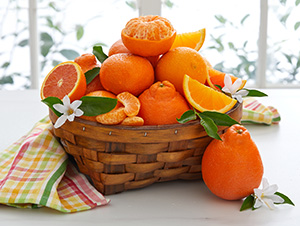
Taste the Sunshine with Hale Groves
At Hale Groves, we believe the best gifts come from the land, not a factory. For generations, our fruit has been grown slowly under the Florida sun, picked at its peak, and delivered fresh to your door. From sweet Navel Oranges to rare Honeybells, every gift shares the simple joy of real flavor—perfect for holidays, milestones, or everyday moments worth celebrating.
Shop Now