
The Development of Navel Oranges
The Department of Agriculture conducted a survey in 1917 in order to determine the origin of navel oranges. The study showed the possibility of a mutation occurring somewhere between 1810 and1820 in a Selecta orange tree that was planted at a monastery located close to Bahia, Brazil. Navel oranges are also called Washington, Riverside or Bahia navel oranges. In spite of the findings of the research conducted by the Department of Agriculture, a researcher at the University of California in Riverside believes navel oranges were derived from the Portuguese navel orange described by Risso and Poiteau during the period of 1818-1822.
What makes navel oranges different from other oranges? The mutation caused the orange to develop another orange located at the base of the original fruit next to the skin. This “twin” is part of a variety of smaller segments that are embedded within the orange peel that surrounds the larger orange. Navel oranges look similar to the human navel on the outside, thus the reason they are called navel oranges. The mutation left the original fruit without seeds thus lacking the inability to reproduce. Therefore cultivation of this new fruit requires grafting cuttings onto other citrus tree varieties.
The process of grafting and cultivation was introduced in Australia in 1824 but wasn’t introduced in Florida until 11 years later, in 1835. Twelve cuttings from the original tree were transplanted in Riverside, California in 1870 with great success, eventually leading to the immense worldwide popularity of navel oranges. The history of navel oranges is well preserved in the California Citrus State Historic Park in Riverside as well as the Orcutt Ranch Horticulture Center in Los Angeles County.
Modern cultivation of navel oranges continues to follow use the process of cutting and grafting. Since producing navel oranges with this method does not allow selective breeding, modern navel oranges have the same genetic makeup as the original tree from which they were cultivated making them clones. This means all navel oranges are essentially fruits from the single tree that was cultivated almost two hundred years ago although there are rare occasions when additional mutations may lead to new varieties of navel oranges.
The seedless nature of navel oranges makes them very unique indeed and likely to be quite appealing to those who prefer seedless fruits. In addition this trait makes them easier to use in recipes, fruit baskets and gift giving to those who may have trouble with the seeds in ordinary oranges. Being able to buy oranges without seeds also makes it easier to feed to children who may not take the time to look for seeds and might therefore accidentally swallow the seeds from other varieties of oranges.
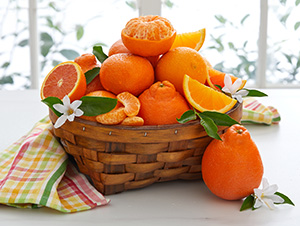
Taste the Sunshine with Hale Groves
At Hale Groves, we believe the best gifts come from the land, not a factory. For generations, our fruit has been grown slowly under the Florida sun, picked at its peak, and delivered fresh to your door. From sweet Navel Oranges to rare Honeybells, every gift shares the simple joy of real flavor—perfect for holidays, milestones, or everyday moments worth celebrating.
Shop Now