
A Brief History of Temple Oranges
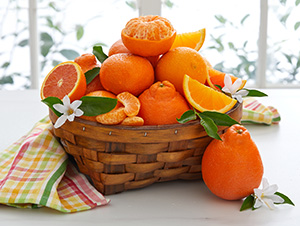
The orange is one of the world’s most popular and diverse fruits. At last count there were over six hundred distinct varieties. Little is known about most of them, but a few of the newer varieties have been well-chronicled. Today we will discuss Temple oranges.
Though it is generally included in the orange family, the Temple orange is actually only half orange. The popular citrus treat is a cross between a Mandarin orange (a tangerine) and a sweet orange, which makes it a hybrid fruit. Growers often call them tangors-a portmanteau word that combines the “tang” from tangerine and the “or” from orange.
Horticulturists have had their eye on the Temple orange for some time. They tell us that it came to Florida 1894. Like the grapefruit, it was first planted on the island nation of Jamaica. Records show that the fruit has been cultivated commercially in Florida since 1917. Though the Sunshine State sends over ninety-five percent of its oranges to the processing plants to be juiced, Temple oranges have always been grown as eating oranges.
The rich and spicy juice and flesh immediately set the Temple orange apart from its peers. It became an instant hit in Florida and it remains one of the most popular eating oranges in the country. According to growers, there are over one million, six hundred thousand temple orange trees, which is about twenty-five thousand acres.
There are many unconfirmed accounts, rumors really, of how the Temple orange gained fame in Florida. The truth is that the tasty treat owes its success to one man, Louis A. Hakes. The owner of a small citrus grove, Mr. Hakes discovered the new variety and named it after his friend, William Chase Temple. More importantly, he discovered that Temple oranges were different from most other varieties.
Not only were they richer and tangier, but they took longer to mature than most oranges. It was Mr. Hakes who instructed his workers to give them a few extra weeks to reach their peak. It was good advice. The Temple orange soon became the envy of every grower in the area.
The fruit was released as a new orange variety in 1917. The quality of the fruit does vary greatly because of it prolonged growing season. Orchard owners who are eager to get their oranges to market often pick Temple oranges too early. The fruit does not reach full maturity until late January, sometimes early February.
Many horticulturists contend that the Temple orange of Florida and the Magnet orange of Jamaica are actually the same variety. But even if it were, that would not diminish Mr. Hake’s contribution to the citrus industry in the United States. Temple oranges are one of only a handful of prime eating oranges grown in Florida.
Taste the Sunshine with Hale Groves
At Hale Groves, we believe the best gifts come from the land, not a factory. For generations, our fruit has been grown slowly under the Florida sun, picked at its peak, and delivered fresh to your door. From sweet Navel Oranges to rare Honeybells, every gift shares the simple joy of real flavor—perfect for holidays, milestones, or everyday moments worth celebrating.
Shop Now