
If you’re looking for a secret ingredient you can use to make your holiday dishes and treats so delicious that everyone will beg to know what you used in them you need to get some Honeybells. Honeybells are a unique fruit that is only available during the time from Christmas through the end of January. Early Honeybells are shipped right around Christmas and are the perfect ingredient for your holiday cooking. Honeybells are bright orange and have an unusual bell shape, which is where the name comes from. They are low calorie and versatile just like oranges and tangerines but…
All posts in Fruit Facts
-
 Continue Reading
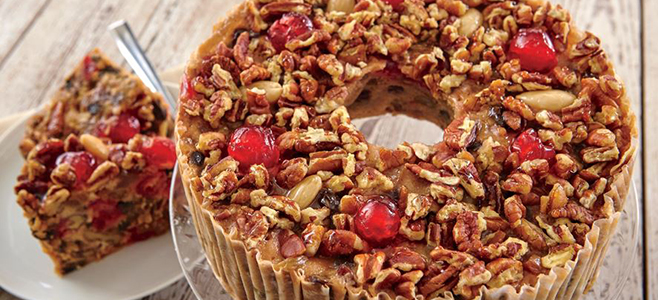
Traditionally served during the holidays or at weddings, fruitcakes have a rich and storied history. As the name implies, fruitcakes are known for their heavy content of dried fruits. Most fruitcakes also include nuts and spices, and all fruitcakes require special handling and baking. What’s the Story with Fruitcake? It’s been a holiday staple for generations, but where exactly did fruitcake originate? And how did fruit cake come to be associated with celebrations? Fruitcake has been around for a long time. There is some disagreement on the true origins of fruitcake…culinary lore indicates that the ancient Egyptians would place a…
-
 Continue Reading
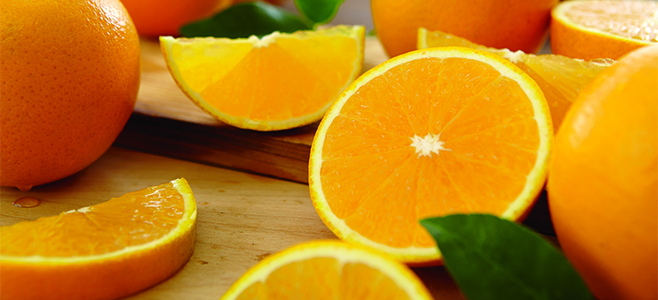
It is widely accepted that the season for Florida oranges is from November to June. This is good news because that means that there is only a very short amount of time when Florida oranges are not available. However, if you like a specific type of Florida oranges, then the season may not be as long as November to June. It may be a little or significantly shorter, depending on the variety you like. This article will give you more specifics on the types of Florida oranges and when you can get the absolute best of this particular crop. You may…
-
Continue Reading
Since Honeybell oranges are only available for a limited time during the year many people buy as many Honeybells as possible and use them to create delicious treats that can be preserved and eaten throughout the year. Just like with any food that is not available year round people crave that super sweet and slightly tangy taste that only comes from a Honeybell. There are lots of different and delicious things that you can create with Honeybells, whether you are a gourmet cook or not. Keep plenty of Honeybells on hand for enjoying as snacks, but get a box to…
-
Continue Reading
What do you think about when you hear the word citrus? Do you think of the scent of your air freshener? Perhaps the fragrance of your new fancy shampoo, conditioner and cosmetic lotion set? Or maybe you think of the family of fruit, Rutaceae, which includes everything from lemons and limes to oranges, grapefruits, tangerines, mandarins and the hundreds of variations and cross breeds of these in between. The word citrus originates from the plant named Citron but has been applied to the genus of the plant as well in scientific classifications. This all encompassing name has become so common…
-
Continue Reading
Honeybells are a treasured treat we love to receive in holiday gift baskets. Unlike other citrus fruits, honeybells are only available for a couple of months each year. The harvest of honeybells coincides with the winter holiday season. Honeybells in holiday gift baskets bring a little bit of sunshine all around the country. While we know everyone loves honeybells today, when did this delightful December to February tradition begin? These alluring citrus hybrids were likely to originate in parts of southern Asia and China when a cross pollination occurred between a pummelo, or grapefruit, and a mandarin orange. The Asian…
-
Continue Reading
Limes are citrus fruits that have a greenish yellow color and are between 3 and 6 cm in diameter. The pulp of limes is sour (more so than the lemon) and can be seen a lot with its counterpart, the lemon. A lot of people use limes to accent their food recipes; others use it as an ingredient for drinks. The lime is smaller than the lemon, but is still a really good source for vitamin C. The pH level of limes is between 6 and 7, making them very healthy picks. You can find limes readily available all year…
-
Continue Reading
No state is better known for its peaches than Georgia, and fresh fruit lovers everywhere continue to have the Peach State forever on their mind. The peach industry in Georgia actually dates back almost 450 years! It’s remained a perennial part of Georgia culture and identity through all the years since. Simple Beginnings In America’s Earliest Times The beginnings of the Georgia peach tradition begin just below the state’s southern boundary, in St. Augustine Florida. But in 1571, Franciscan monks planted the state’s own first trees on St. Simons and Cumberland islands. Over the next 150 years, the eye-appealing tree…
-
Continue Reading
The Department of Agriculture conducted a survey in 1917 in order to determine the origin of navel oranges. The study showed the possibility of a mutation occurring somewhere between 1810 and1820 in a Selecta orange tree that was planted at a monastery located close to Bahia, Brazil. Navel oranges are also called Washington, Riverside or Bahia navel oranges. In spite of the findings of the research conducted by the Department of Agriculture, a researcher at the University of California in Riverside believes navel oranges were derived from the Portuguese navel orange described by Risso and Poiteau during the period of…
-
Continue Reading
The Clementine orange is a carefully bred combination of the mandarin orange and the sweet orange. They contain nutrients essential for keeping the body’s immune system in its best running order. Not only do they contain Vitamin C, Calcium, potassium and fiber, but also are low in calories. A Clementine is just about 35 calories and 8 grams of carbohydrates. Legend has it that a French cleric first bred this delicious fruit in Algeria more than a hundred years ago. Since then, and until the late 1990s, they were mostly enjoyed in Europe, particularly in France. In the modern United…