
Tangerines
The tangerine is one of the tastiest, most nutritional and convenient citrus fruit. It is a member of the mandarin family of oranges and known to have been cultivated in Asia more than 3,000 years before it was introduced to the West about two centuries ago. The tangerine is an important food source which contains essential nutrients and minerals such as vitamin C, beta-carotene, potassium, magnesium and others.
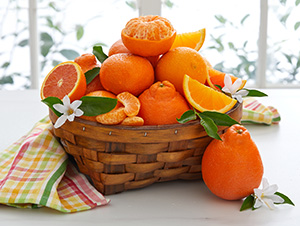
Tangerines are smaller than oranges, have a deeper orange skin, and the flesh inside is very juicy, usually with a mild, sweet taste. Most varieties of this citrus fruit have few or no seeds. The best time to eat tangerines is November through January, although when juiced at the right time, tangerine juice holds up to freezing very well. Otherwise, they should be kept in the refrigerator no longer than seven days to maintain their impressive taste and nutritional value. The best tangerine to buy will be soft, glossy, pebbly-skinned and feel somewhat heavy for its size.
To get the most of the tangerine’s nutritional value, the best way to eat this delicacy of a citrus is to peel it raw and enjoy its moist, juicy wedges right off the skin. Fresh tangerine wedges are also used as ingredients to many healthful meals and snack recipes. The tangerine peel is also used not only as a decorative garnish or grating, but when dried and cured properly can also be eaten as a glaze or preserve, like marmalade or jelly.
Here are some of the common varieties of tangerines:
Clementine – the most popular variety of tangerine, it contains very few seeds and has a glossy, dark orange peel.
Dancy – these have a dark red-orange thin peel, a fairly large number of seeds, and an excellent tart-sweet flavor.
Honey Tangerine – also known as Murcott or Honey Mandarin, this variety has a thin skin, many seeds, and is very sweet and juicy.
Minneola Tangelo – this is a cross between a tangerine and a pomelo (a type of grapefruit). Tangelos have a characteristic knob on one end where the stem grows, and a dark orange color.
Therefore, if dreading the upcoming winter weather is getting you depressed, lift your spirits by adding bright, zesty Florida citrus fruit to your diet. Add tropical-flavored recipes to your kitchen repertoire for an aromatic menu that includes a splash of sunshine from start to finish.
Taste the Sunshine with Hale Groves
At Hale Groves, we believe the best gifts come from the land, not a factory. For generations, our fruit has been grown slowly under the Florida sun, picked at its peak, and delivered fresh to your door. From sweet Navel Oranges to rare Honeybells, every gift shares the simple joy of real flavor—perfect for holidays, milestones, or everyday moments worth celebrating.
Shop Now