
Clementines in Brief
Clementines are a season citrus fruit generally found between November and March with a peak sweetness around December.
These little orange like fruit were originally cultivated in the Mediterranean area including Spain and across Northern Africa. They are most well known in what is said to be the birth place of the clementine, Algeria. They are said to have been introduced to the United States of America in 1882. They were grown at the Citrus Research Center at UC Riverside starting in 1909 and introduced into commercial agriculture in 1914. Although clementines are a distinguished seasonal fruit, they are considered the most well known of the tangerine family.
This seasonal fat free treat has become the perfect alternative dessert for the holiday season. Clementines indulge the need for something sweet after a large savory family meal, with a small fraction of the calories that fruit pies, chocolate cakes and Christmas cookies offer.
It is said that the Clementine happened by accident when the clergyman, Pierre Clement Rodier, accidently cross pollinated a mandarin orange fruit with an orange in an Algerian orphanage in Misserghin. The result was a seedless mandarin. The name then was a dedication to its creator, Clement, thus the name clementine. Clementines are also sometimes called the seedless tangerine or Algerian tangerine.
It is also said that the Clementine was created much earlier, originating in China, but there is no definitive answer as to the origins of the fruit. This may very well be true as the clementine also has a close relative that was cross pollinated in Japan, the satsuma. This is equally famous, but perhaps not as famous in the United States of America.
The best part about this new fruit was not the fact that it had no seeds, but that it was also extremely easy to peel! Because the skin is so thin and loose from the clementine fruit, consumers can distinguish a ripe Clementine by its strong sweet smell. This is also true of many other cousins within the tangerine family. Most of the members of the tangerine family, including the clementine, have an interior that has seven to fourteen segments. This particular fruit has less than 50 calories and is a good source of Vitamin C. It also offers a decent source of Thiamine, Vitain B6 and Folate and a minimal amount of Riboflavin, Niacin, Pantothenic acid, Vitamin E, Calcium, Iron, Magnesium, Manganese, Phosphorus, Potassium and Zinc per 100g (3.5oz).
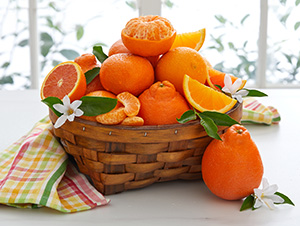
Taste the Sunshine with Hale Groves
At Hale Groves, we believe the best gifts come from the land, not a factory. For generations, our fruit has been grown slowly under the Florida sun, picked at its peak, and delivered fresh to your door. From sweet Navel Oranges to rare Honeybells, every gift shares the simple joy of real flavor—perfect for holidays, milestones, or everyday moments worth celebrating.
Shop Now