
Origins of Fruitcake
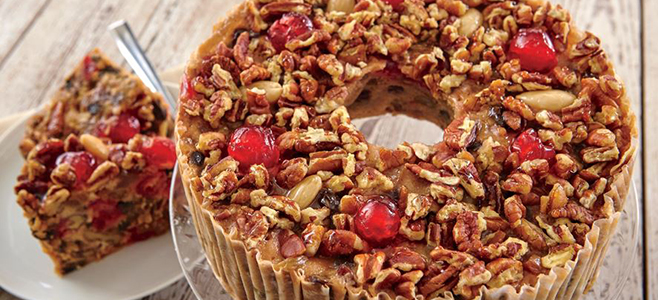
Traditionally served during the holidays or at weddings, fruitcakes have a rich and storied history. As the name implies, fruitcakes are known for their heavy content of dried fruits. Most fruitcakes also include nuts and spices, and all fruitcakes require special handling and baking.
What’s the Story with Fruitcake?
It’s been a holiday staple for generations, but where exactly did fruitcake originate? And how did fruit cake come to be associated with celebrations?
Fruitcake has been around for a long time. There is some disagreement on the true origins of fruitcake…culinary lore indicates that the ancient Egyptians would place a type of fruitcake in the tomb of their loved ones (possibly to provide food in the afterlife). There is a general consensus, however, that fruitcakes became more common during Roman times, when the sweet dessert was prized for its portability and oftentimes carried by soldiers into the battlefields.
The fruitcake we’re familiar with nowadays is probably very different from the first fruitcakes produced thousands of years ago. Recipes have been discovered that included pomegranate seed, pine nuts and barley mash. During the Middle Ages, the addition of honey, spices and dried fruits (which arrived from the Mediterranean), increased the popularity of fruitcakes.
How has Fruitcake Changed Through the Years?
As the popularity of fruitcakes began to grow in Europe, recipes varied greatly, usually depending on the availability of ingredients. Catholic Church regulations also played a part in the recipes for fruitcake: during the mid-1400s, for example, the Church had restrictions on the use of butter and milk during a fast. In 1490, Pope Innocent VIII granted written permission to the Saxon region in the “Butter Brief” for the use of butter and milk to make North German Stollen fruitcakes.
During the 1600s, the American Colonies became an inexpensive source of raw materials (specifically sugar) for Europe. This, coupled with the discovery that sugar could be used to preserve fruits, created an excess of candied fruit which helped to make fruitcakes more popular and very affordable.
From its early origins of simple ingredients, the fruitcake had morphed into a decadent dessert throughout the 18th and 19th centuries. Over the years, the addition of candied fruit, nuts, spices, sugar, and alcohol had garnered fruitcake a reputation for being “sinfully rich”. By the time of Queen Victoria’s reign, gourmet fruit cake had become an integral part of teatime in England. It also became the custom in England for unmarried wedding guests to take home a slice of fruitcake and put under their pillow at night to dream of the one they will marry. Its rich flavor and colorful appearance also make holiday fruit cake a yearly tradition.
Where Can I Buy Fruit Cake?
Many families hand down special fruitcake recipes through the generations, but if you don’t feel up to making your own, you can find fruit cakes for sale in your local grocery store at certain times of the year, or order fruit cakes online. You can mail order fruit cake from Hale Groves, for example: our Grandma’s Fruit Cake is crammed with whole cherries, Florida pineapple, plump raisins, halved walnuts, whole almonds, and sweet Southern pecans. Plus, it’s moist with the finest liquors: bourbon, smooth, dark rum, and fine brandy. Presented in a pretty, keepsake tin and available in three sizes, this is the one to go for when you want to buy fruit cake!
Love Fruitcake? You’re in Good Company!
From ancient times, fruitcake has a history as rich as its flavor. Remembering the origins of the humble fruitcake can add to its taste and appeal – the next time you’re offered a slice of this rich, decadent dessert, remember the pharaohs, soldiers, colonists, and royalty that have enjoyed fruitcake in the past!
Taste the Sunshine with Hale Groves
At Hale Groves, we believe the best gifts come from the land, not a factory. For generations, our fruit has been grown slowly under the Florida sun, picked at its peak, and delivered fresh to your door. From sweet Navel Oranges to rare Honeybells, every gift shares the simple joy of real flavor—perfect for holidays, milestones, or everyday moments worth celebrating.
Shop Now