
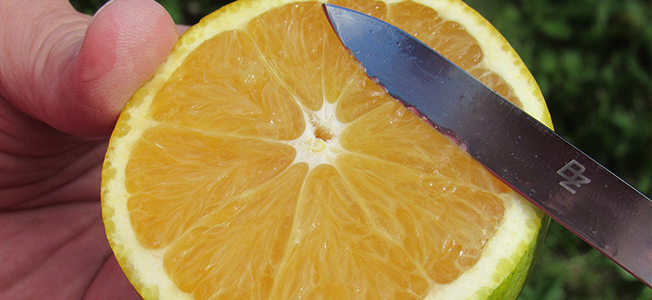
The navels look as good on the inside as they do on the outside. The deep orange internal color indicates high brix/sugar content and you can see how the cells are full of juice and ready to eat. Our navels have sized up well and the cool nights have aided in them coloring up nicely. Bins of freshly harvested navels in the field.
All posts in Grove Update
-
 Continue Reading
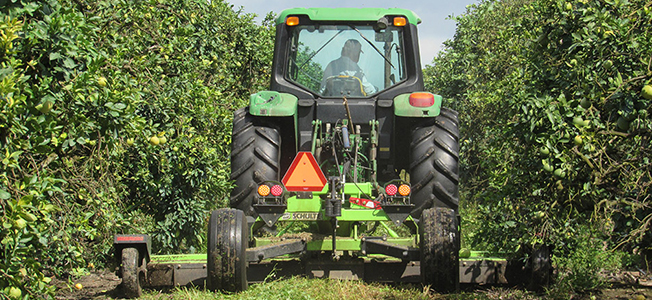
One of our tractors mowing in between the rows of navel trees in our grove. The internal color is getting a deeper orange which indicates the sugars are building. The brix are currently testing between 9.8 ad 10.40 which is very good this early in the season. Our navels are sizing up nicely with the average size ranging from 3 to 3 1/2 inches which is perfect for this time of year.
-
 Continue Reading
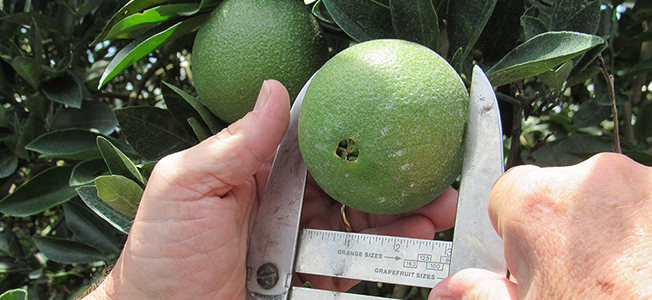
Our citrus expert is using a set of citrus calipers to measure our navels. They are currently averaging 2.75 inches which is right on track to start harvesting in November. We constantly monitor size and quality so we can plan the right time to harvest and pack a given crop. You can see the internal color of the navel turning a deeper orange color as the sugar and juice continues to develop. A red tail hawk leaving its perch on top of a navel tree.
-
 Continue Reading
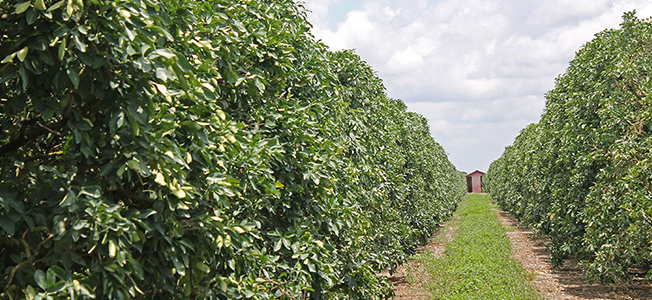
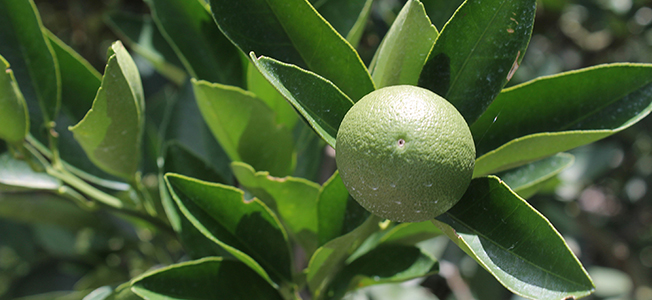
Looking down a row of our 25 year-old grapefruit you can see how we keep the trees pruned and the ground clean under the trees with grassed centers. This is part of our cultural care program. The trees are kept at a manageable size which aids in the harvesting and movement of equipment up and down the rows and reducing mechanical injuries to the fruit and trees. The ground under the trees is kept clean and the grass middles mowed. This aids in air circulation and helps prevent the harboring of insects. You can see copper residue on the fruit…
-
 Continue Reading
The nice straight tree row is accomplished by hedging the trees each year. The hedging is done by a large ?hedging? machine with special high speed circular saw blades mounted vertically on booms cutting both sides as it travels down the tree rows. This maintains a manageable height and width between trees which aids in harvesting and production while reducing mechanical damage to the fruit and trees as equipment travels up and down the rows. By stepping back you can see how many pieces are on this 30-year-old Navel tree and how consistent the sizes are. This is a strong…
-
 Continue Reading
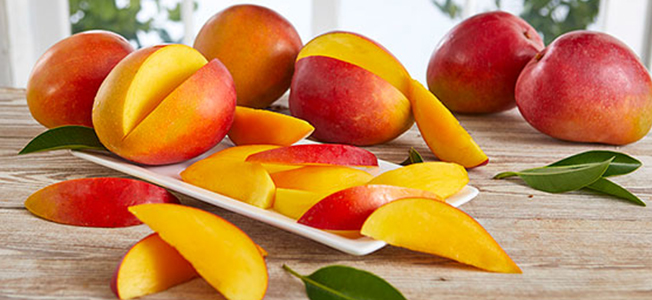
Mangos, the undisputed royalty of tropical fruits, beckon us with their sweet promises and juicy allure. Selecting the perfect mango requires more than just a casual glance. This guide will unlock the secrets to becoming a mango connoisseur, ensuring every bite is a burst of tropical bliss. Cracking the Mango Code: Unveiling the Secrets of Selection The Aroma Adventure: A ripe Florida mango is not just seen; it’s smelled. Start by inhaling the sweet fragrance around the stem. A delightful aroma indicates readiness for indulgence. When gently pressed, a ripe mango should yield slightly, striking the perfect balance between firmness…
-
 Continue Reading
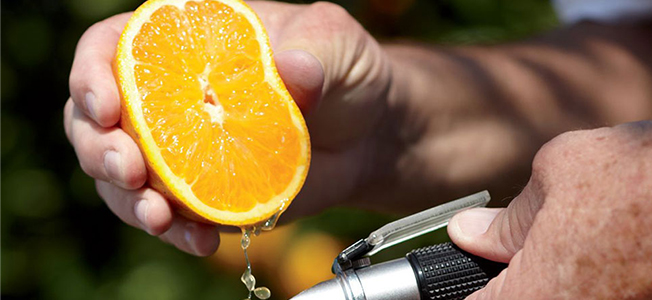
The classic navel on the bottom of a navel orange is actually a secondary fruit formed within the navel orange itself. Testing the navels with a refractometer to check the Brix/sugar in the fruit. We do this in the field to verify it meets our quality standards before packing. Our late season navels are harvested from our older trees. These mature trees have a big canopy and large root system that allows them to draw up and store large volumes of water and nutrients. This aids in the fruit being able to hang on the tree till late in…
-
 Continue Reading
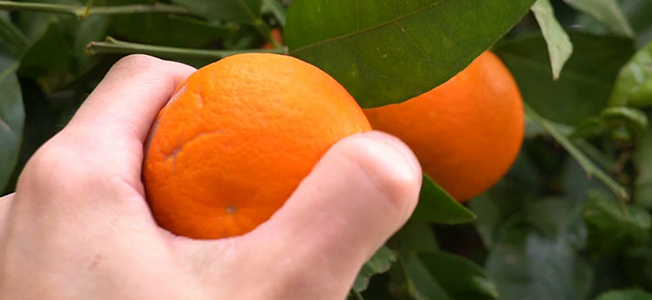
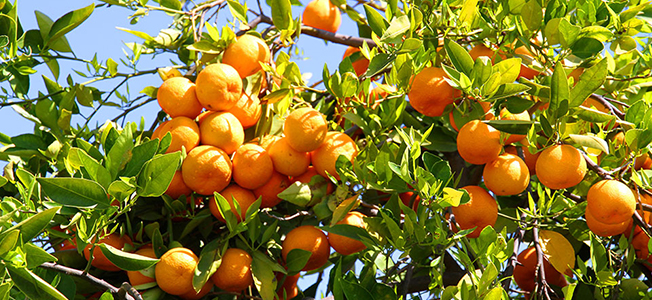
Picking one of our spring tangelos to test the sugar and acid levels. In this late maturing tangelo it?s important that we monitor the acid so we can harvest at the peak of maturity. This is when we reach the ideal sugar to acid ratio making for a delicious sweet and slightly tangy tangelo. Our spring tangelos are our latest maturing tangelo. The cool winter nights slow down the reduction in the citrus acid allowing the fruit to stay on the tree longer while continuing to build sugars. A crop of delicious, bright orange, easy peeling spring tangelos.
-
 Continue Reading
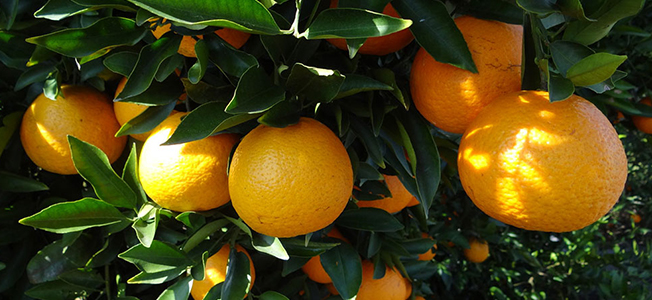
After testing hundreds of individual fruit, and spending dawn to dusk in the grove caring for trees, the harvest of our delectable Cara Cara oranges is finally here. In this tree, the beautiful fruit of our labor are displayed in astounding numbers. Deep in the grove, early morning light casts a glow upon our perfectly ripe Cara Cara oranges. These seedless treasures are ready for us to pick by hand, and carefully ship to you in refrigerated trucks. The Cara Cara oranges you receive from us will have been on the tree just days before arriving on your table. The…
-
 Continue Reading
It?s time for the annual Temple Orange harvest. These medium-sized oranges are a super-sweet hybrid of tangerine and orange. They are easy to peel, have few seeds, and are the perfect flavor and juiciness to enjoy out of hand. Abundant ripe Temple Oranges hang low on our trees in the grove. This Florida favorite is only available in February, and we pick each one by hand to protect their thin, easy-peeling skin. Temple Oranges have bright orange flesh and few seeds. They are perfectly juicy without being overly wet, so you can enjoy them by peeling and eating them anywhere.…